In our course textbook, Sometimes Reading is Hard by Robin Bright, she describes story vines as a method to build students’ reading fluency, collaboration, and speaking skills (2021, p.91). Story vines are braided strands of yarn or rope that have small artifacts, made out of various materials, to represent the sequence of the story events (Bright, 2021, p.91).
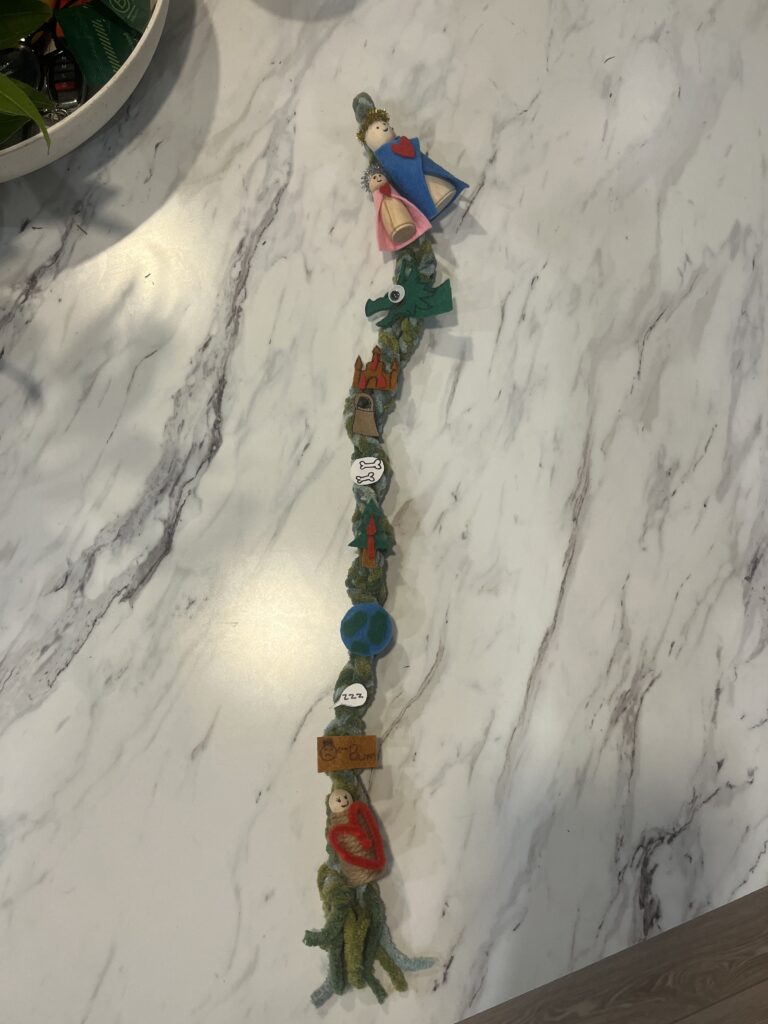
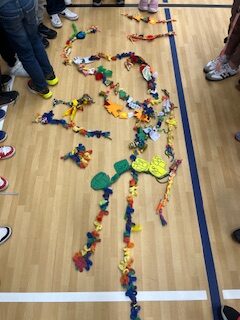
We had the opportunity to create our own story vines in class. I choose to use Robert Munsch’s The Paper Bag Princess! I absolutely love this story and it is a childhood favourite of mine. We had various materials to use to create our artifacts and it was such a fun process! I added a lot of artifacts to my story vine since I wanted to be able to show the students lots of ideas of artifacts they could potentially create!
Making Story Vines at Huckleberry Books
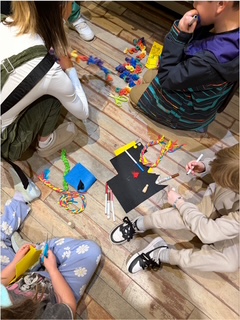
To celebrate Paper Bag Princess Day, we teamed up with Huckleberry Books, to do a story vine workshop with a grade 2/3 class.
When the students arrived, we read the story in small groups. Afterward, we showed them examples of story vines and I shared the one I created to help students generate ideas. Students used planning sheets to decide which artifacts they wanted to include. While they planned, some classmates and I braided yarn for their vines. Students were very engaged in the creative process, it was exciting to see their ideas come to life. Once finished, they practiced sharing their story vines and used their artifacts to retell the story’s sequence of events.

Re-Telling Stories with the Grade 2/3 Class
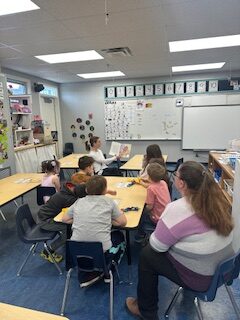
The following day we visited Gordon Terrace Elementary, where the grade 2/3 students re-told the story using their story vines to the kindergarten classes. Bright states that when students re-tell their stories to others it promotes their understanding of story sequencing, enhances their vocabulary, and links visuals with their stories (2021, p.91).
During the re-telling students shared their artifacts with peers in small groups. I noticed they often focused mostly on describing their artifacts rather than sequencing the story events but since students were in groups, most of the main events were covered. This activity was definitely beneficial for students reading comprehension, they gained a deeper understanding of the plot by constructing their vines. With a bit more explicit modelling, I think the re-telling could have been more detailed, so that’s something I will ensure to do in my own classroom. Overall it was a great experience and I cannot wait to bring this activity into my own practicum this year integrating it with Science to tie in butterfly and plant lifecycles.
BC ELA Curriculum Connections Grade 2/3
- Big Idea: Language and story can be a source of creativity and joy.
- Curricular Competencies: Explore/Use oral storytelling processes. Recognize the structure and elements of story.
- Content: Elements of a story. Reading strategies. Oral language strategies.
Other ways to incorporate story vines
When I was looking up story vines online, I came across an article from CBC News about Manitoba teachers using story vines. The teachers in this article used story vines to bring to life traditional oral Indigenous stories such as the creation story. This is something I would love to do with my own class one day, even if a story is not traditionally written down, it can still be used to create a story vine. For example, when listening to the story, students could make small notes about what sticks out to them and that could be transformed into the artifact for the story vines. I think this would be a great way to embed the First Peoples Principles of Learning and Indigenous perspectives into the classroom.